PUBLISHED ARTICLE / XUNPAN
Vietnam Production for U.S. Sales: The Practical Benefits Under Tariff Pressure
For companies selling into the United States, producing and shipping from Vietnam is more than choosing a different port. The real questions are origin, tariff structure, supply-chain backup, and whether American-market certification remains intact.
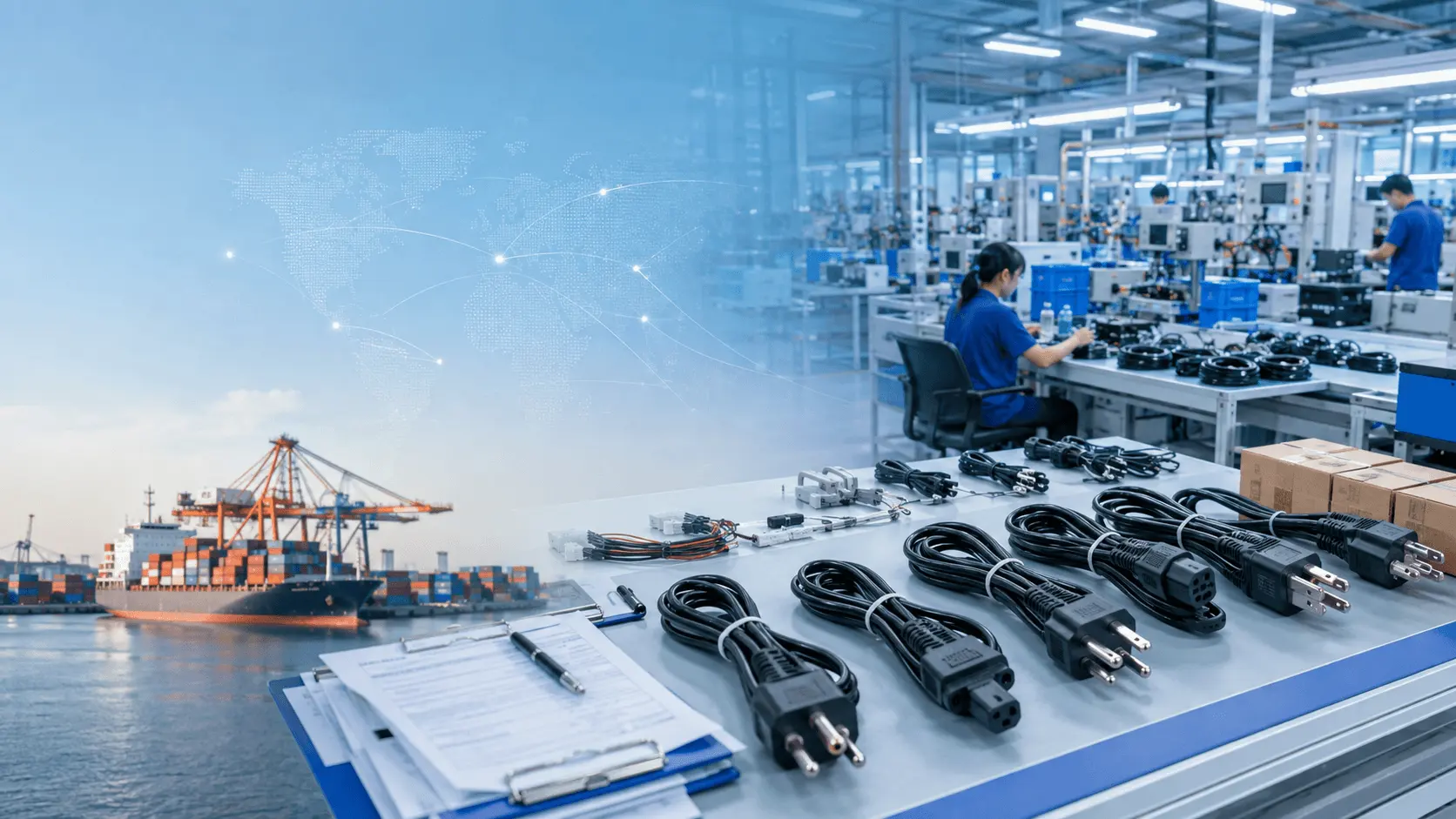
When a U.S. customer asks for a “non-China source,” the first question for procurement should not be, “Can this ship from a Vietnamese port?” It should be, “What is the country of origin in the eyes of U.S. Customs?”
Those questions are often treated as if they were the same. Shipping from Vietnam does not automatically turn a China-origin product into a Vietnam-origin product. But when the product genuinely undergoes production in Vietnam that is sufficient to affect the origin analysis, a Vietnam manufacturing base may help reduce China-origin tariff exposure and diversify supply risk.
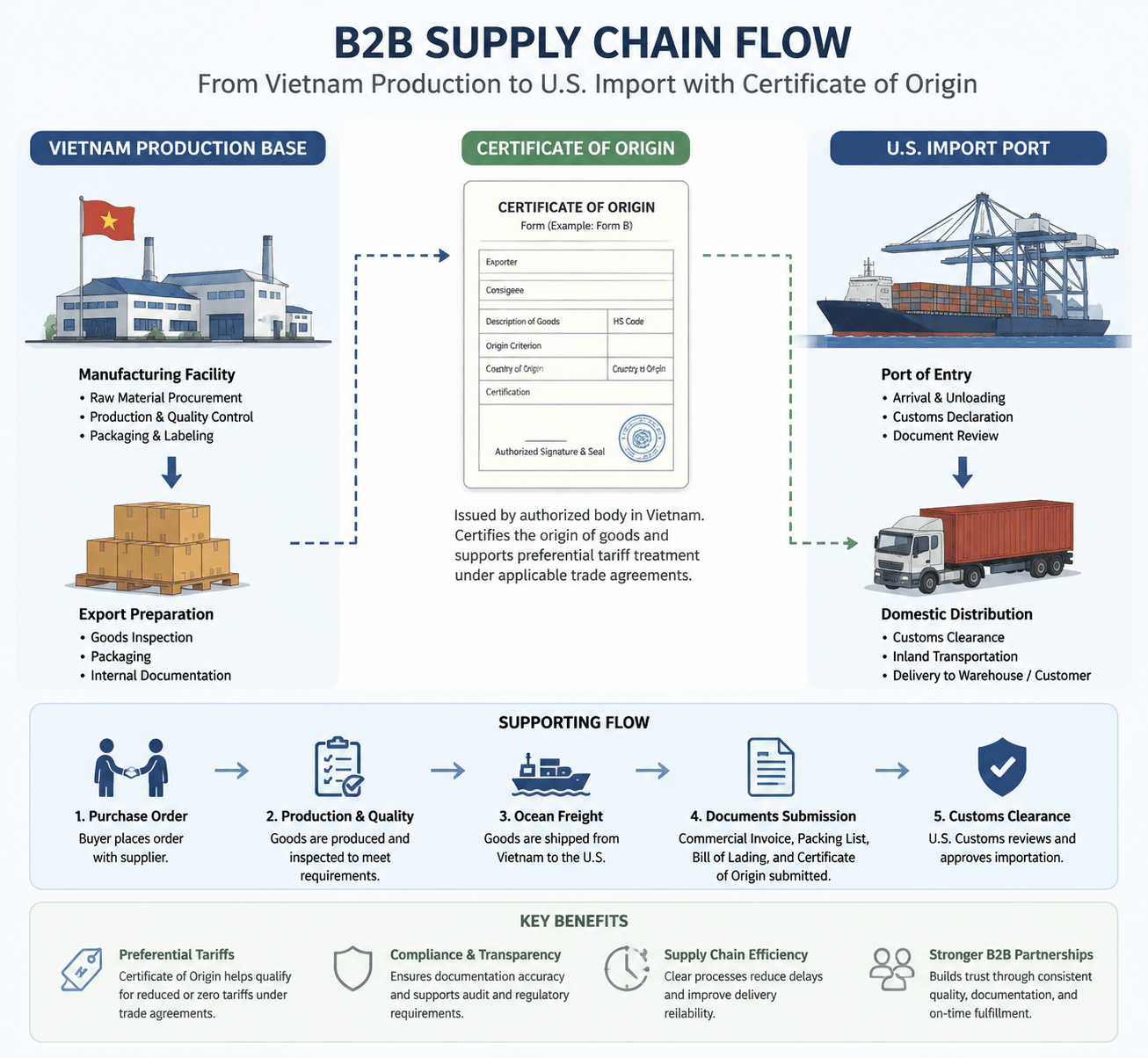
First, be clear: Vietnam is not an automatic duty-free route
The most direct commercial value of a Vietnam option is that a company does not have to tie every U.S. order to China origin. For products affected by China-related tariff measures, genuine Vietnam origin may put the shipment on a different tariff-analysis path.
That does not mean Vietnam-origin goods automatically enter the United States duty-free. The White House’s October 2025 U.S.-Vietnam trade framework states that the United States will maintain a 20% reciprocal tariff on originating goods of Viet Nam, while identifying certain products for a 0% reciprocal tariff rate. The actual calculation still depends on the HS classification, ordinary customs duty, other trade measures, and any exemptions or adjustments in force at the time.
So when comparing China production with Vietnam production, do not place one generic “Vietnam rate” next to one generic “China rate.” Build a landed-cost sheet for each candidate product and check:
- whether the HS classification is confirmed;
- how origin is determined in each production scenario;
- the ordinary duty and additional duties separately;
- whether other measures, exemptions, or temporary adjustments apply;
- certification, freight, insurance, warehousing, and documentation costs beyond duty.
That is the comparison that can support a U.S. sales price and margin.
The second benefit: turn single-country exposure into a switchable capability
Tariffs are only one supply-chain pressure. U.S. importers also care about policy changes, production capacity, port congestion, and whether a supplier has a second workable route when one country or site is disrupted.
A Vietnam manufacturing base can create value through concrete operating choices: a second production path for the same product; another shipping origin for U.S. customers; distributed capacity and critical processes; and room to switch during peak demand. It does not guarantee that every shipment will be faster or cheaper. It reduces the fragility of putting every order through one production location.
That is why “manufactured and shipped from Vietnam” is more meaningful than “transshipped through Vietnam.” The first can build a long-term system of capacity, quality, and documentation. The second may only change the route or the label; it may not change origin and can add customs scrutiny.
HSC’s company profile lists Vietnam among its production bases and records the Vietnam production base as established in 2024. For a U.S. program, the value of that footprint has to show up in the actual product, process, and records—not just in a supplier address.
Origin follows the production facts, not the last loading port
When a product uses materials and processes from more than one country, U.S. Customs may focus on whether the last substantial transformation occurred during production. The precise result depends on the product facts, HS classification, complexity of the processes, and the applicable customs rule or ruling.
That gives buyers a practical verification path. Before placing an order, ask the supplier for the BOM, process flow, key component sources, processes completed in Vietnam, production records, and origin statement for that product. Do not rely only on a “Made in Vietnam” label, and do not assume that sourcing components from China automatically prevents Vietnam origin. The decisive question is whether the actual process and evidence support the same conclusion.
If most of the product is completed in China and Vietnam only performs simple assembly, packing, or relabeling, do not put an assumed duty saving into the quotation model. Analyze origin first, then model the commercial benefit of Vietnam production.
For American power cords, a site move must stay connected to certification
For power cords and plugs, the commercial case for Vietnam production must stand alongside U.S.-market technical requirements. HSC’s current catalogue records UL and ETL for the 1-15P American Polarized Power Cord, and its UL/ETL American Plugs category groups the relevant product family. These catalogue records help a buyer identify a product direction; they do not mean every product or every production site shares the same certification scope.
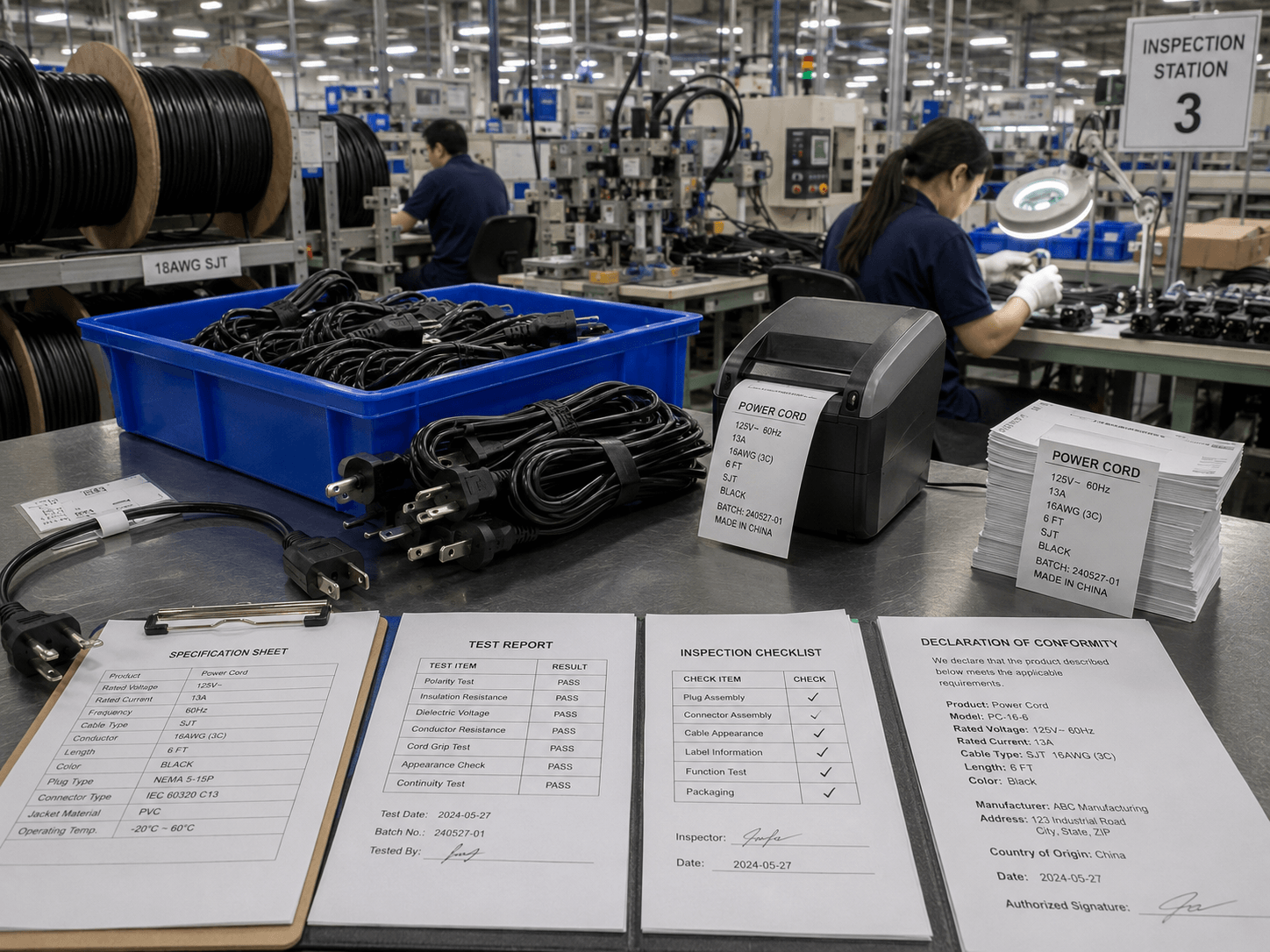
If the production site, critical materials, construction, or controlled process changes, confirm the certification body’s, certificate holder’s, and customer’s requirements before mass production. At minimum, ask: which model, factory, construction, and materials does the certificate cover? Does Vietnam production require a new evaluation, factory inspection, or document update? Do samples, mass production, and later changes remain within the same controlled scope?
A site move that solves the customs paperwork but breaks the UL/ETL program, the finished-product certification, or the customer’s technical file can still delay sales. For an American power cord, “can manufacture” and “can deliver under the required certification status” are different questions.
Before you order, make the Vietnam option operational
A useful supplier review does not need to begin as a huge audit. These six questions will expose most plans that only change the shipping point:
- Has the product’s HS classification and current U.S. tariff stack been confirmed?
- Which key processes happen in Vietnam, and where do the materials and semi-finished goods come from?
- Can the supplier provide a product-specific BOM, process flow, production records, and origin-supporting documents?
- Does the quotation separate ordinary duty, additional duties, freight, insurance, warehousing, and documentation costs?
- Which factory, model, construction, and certification scope do UL/ETL or the customer’s specified approvals cover?
- If U.S. policy or customer requirements change again, can production switch between China and Vietnam while maintaining the same quality controls?
One last thing
For products sold into the United States, the benefits of Vietnam production and shipping can be summed up in three points: less dependence on a single country of origin, more supply-chain switching capacity, and clearer source and compliance management for the U.S. customer. Its value cannot be proven by saying, “Vietnam shipping means lower duty.”
An executable plan should come with a tariff calculation, origin analysis, production records, certification scope, and logistics quote. HSC’s business history is recorded as beginning with its predecessor factory in 1996, and its current catalogue includes UL/ETL American-market products. If a project needs a China-versus-Vietnam production-path review, product selection, and documentation plan, start with the American plugs and power cords category, then contact HSC with the product requirements.
This article provides general industry information. Specific technical requirements remain subject to the current standards and certification-body rules of the target market. Tariff, origin, and customs outcomes depend on the product facts, HS classification, and U.S. laws, regulations, and official interpretations in force at the time; verify them with a qualified trade adviser, customs broker, and relevant certification body before quoting or ordering.
RELATED EVIDENCE