PUBLISHED ARTICLE / XUNPAN
UL or ETL? What North American Power Cord Buyers Actually Need to Verify
A customer asks for “UL,” but the supplier offers ETL. The useful question is not which mark ranks higher—it is whether the standard, model, certification scope, and purchasing specification all match.
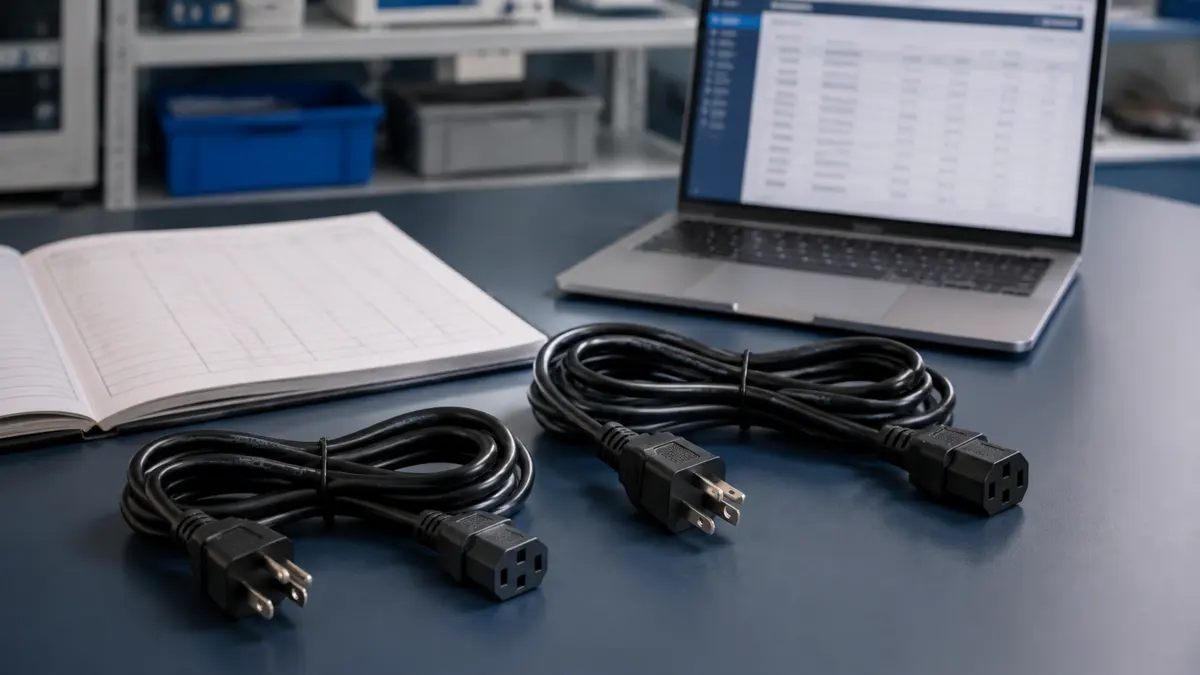
A North American power cord RFQ says “UL required.” The supplier responds with a product carrying an ETL mark. Buyers often hear two absolute answers at this point: ETL cannot replace UL, or the two marks are interchangeable in every situation.
Neither answer is careful enough.
Under the U.S. Occupational Safety and Health Administration's NRTL program, both UL LLC and Intertek Testing Services NA, Inc. appear on the current list of recognized laboratories. When NRTLs are recognized for the same product safety test standard, OSHA considers them capable of testing and certifying under that standard. The NRTL program does not rank one laboratory above another by relative experience, personnel, facilities, equipment, or testing methods.
That regulatory foundation matters. It still does not turn one certification record into another, or override a customer's written purchasing requirement.
Separate the standard, the certification body, and the mark
Three different things tend to collapse into the word “certification.”
The product safety standard contains the applicable construction, material, testing, or marking requirements. The certification body is the NRTL that evaluates and certifies the product. The registered certification mark—UL or ETL in this case—identifies the organization that issued the certification and authorized use of its mark within a controlled scope.
This is why “tested to a UL standard” does not automatically mean “UL Listed.” More than one NRTL may be recognized to test and certify to a particular product safety standard. The mark on the finished product depends on which organization completed the certification and authorized that mark.
The reverse assumption is risky too. A mark on one product does not automatically cover every cord, length, plug, material combination, or manufacturing location offered by the same supplier. Buyers still need the exact model and directory record.
OSHA recognition establishes the baseline—not your order approval
OSHA's NRTL FAQ describes a properly certified product in practical terms. In general:
- The product is labeled or marked with the NRTL's registered certification mark.
- The product is covered by a test standard included in that NRTL's OSHA-recognized scope.
- The certification is issued from a site OSHA has recognized.
An NRTL's recognition scope includes specific test standards, recognized sites, and approved supplemental programs. A supplier brochure that says “UL/ETL available” therefore is not enough for release. The actual question is whether the quoted power cord model appears in the relevant directory, under the right product category and standard, with information that matches the product mark and supporting documents.
Contract language remains important. A regulatory or inspection framework may accept certification by an NRTL recognized for the applicable standard, while a customer specification, retailer program, appliance certification file, or approved-parts list may still name a particular mark. If the order says “certified by an OSHA-recognized NRTL,” there may be room to use either route. If it explicitly says “UL Listed,” do not substitute ETL without written approval.
A more useful UL-versus-ETL comparison
For a buyer, this table is more useful than asking which mark is “better”:
| Check | UL | ETL |
|---|---|---|
| Certification organization | UL LLC | Intertek Testing Services NA, Inc. |
| OSHA NRTL status | Appears on the current list | Appears on the current list |
| Record to verify | UL certification record and applicable scope | Intertek ETL Listed record and applicable scope |
| Online verification route | UL Product iQ | Intertek Listed Products Directory |
| Order-level checks still required | Model, standard, applicant/manufacturer, mark, site, and construction scope | Model, standard, applicant/manufacturer, mark, site, and construction scope |
The table deliberately does not claim that one route is always stricter, faster, or less expensive. Timing, cost, and project path depend on the product, applicable standard, samples, documentation, and certification-body arrangements. The name of the mark cannot answer those questions.
Verify the record in this order
Start with the product or clear product photographs. The certification mark and control information should be legible; an icon on a carton, quotation, or sales page is not a substitute for the product marking.
Then use the issuing organization's official directory:
- UL says Product iQ can be used to verify UL certification of products and components and review UL guide information.
- Intertek directs users to its Listed Products Directory, where records can be searched by manufacturer, model, or standard.
Once a result appears, do not stop at “found.” Compare the record against the order:
- Does the company name match the supplier documentation?
- Does the model or series cover the exact quoted item?
- Do the product category and standard match this power cord?
- Do the mark and control information on the product agree with the directory?
- Do changes in plug, cordage, connector, rating, length, or construction need further review?
- If the manufacturing site or a critical material changes, does the certification scope still apply?
If the directory, certificate copy, and product marking do not agree, pause the release and ask the supplier or certification body to resolve the discrepancy. Similar appearance or a shared factory is not evidence of certification coverage.
How to read UL and ETL labels in the HSC catalogue
HSC's UL/ETL American plugs category gathers American-market products whose current catalogue records carry the relevant certification labels. Examples include the 1-15P American polarized power cord, 5-15P American three-prong to C13 power cord, 6-20P American three-prong power cord, and American 5-15P medical plug power cord. Their current catalogue records list both UL and ETL.
These labels help a buyer build a shortlist; they do not replace project-level certification review. Before ordering, provide the destination market, wall-plug and equipment-end configuration, ratings, cordage requirements, intended use, and any customer-mandated mark. Then request controlled certification information for the exact model.
Five questions before purchasing approval
- Does the customer require a particular mark, or certification by any NRTL recognized for the applicable standard?
- Does the directory record cover the exact quoted model rather than only a similar series?
- Do the product mark, certificate information, and online directory agree on the company and control details?
- Do changes in cordage, connector, length, color, or manufacturing site affect the certification scope?
- If ETL is proposed in place of UL, has the customer, appliance certification party, or sales channel accepted it in writing?
Once these questions are answered, UL versus ETL stops being a debate about logo familiarity. It becomes a documented purchasing decision that can be reviewed later. To evaluate American power cord models and their certification records, start with the UL/ETL American plugs category, then contact HSC with the project requirements.
This article provides general industry information. Specific technical requirements remain subject to the current standards and certification-body rules of the target market.
RELATED EVIDENCE