PUBLISHED ARTICLE / XUNPAN
How to Source an Overseas Replacement Power Cord for a Small Appliance
A small appliance may be usable while its plug or power cord is the part that fails first. Check the market, appliance-side connection, and nameplate data before asking HSC about a replacement set.
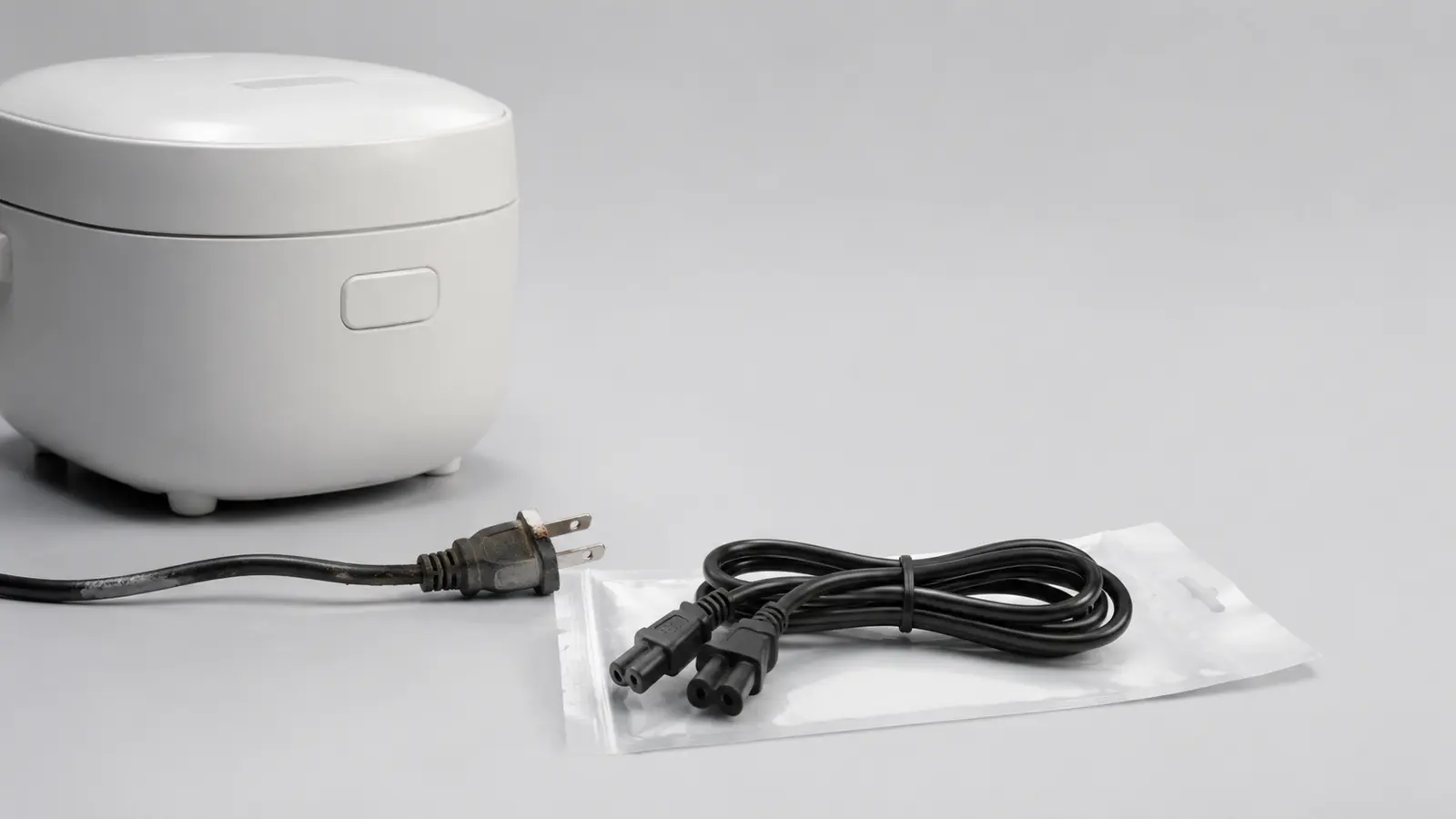
A rice cooker may still operate normally while its power cord is the first part to fail—after repeated bending, pulling, or damage around the plug. For an appliance brand’s service team, a repair channel, or a small spare-parts buyer, replacing the cord may be more practical than replacing the entire appliance. The difficulty is finding a cord that actually matches the appliance rather than one that only looks similar.
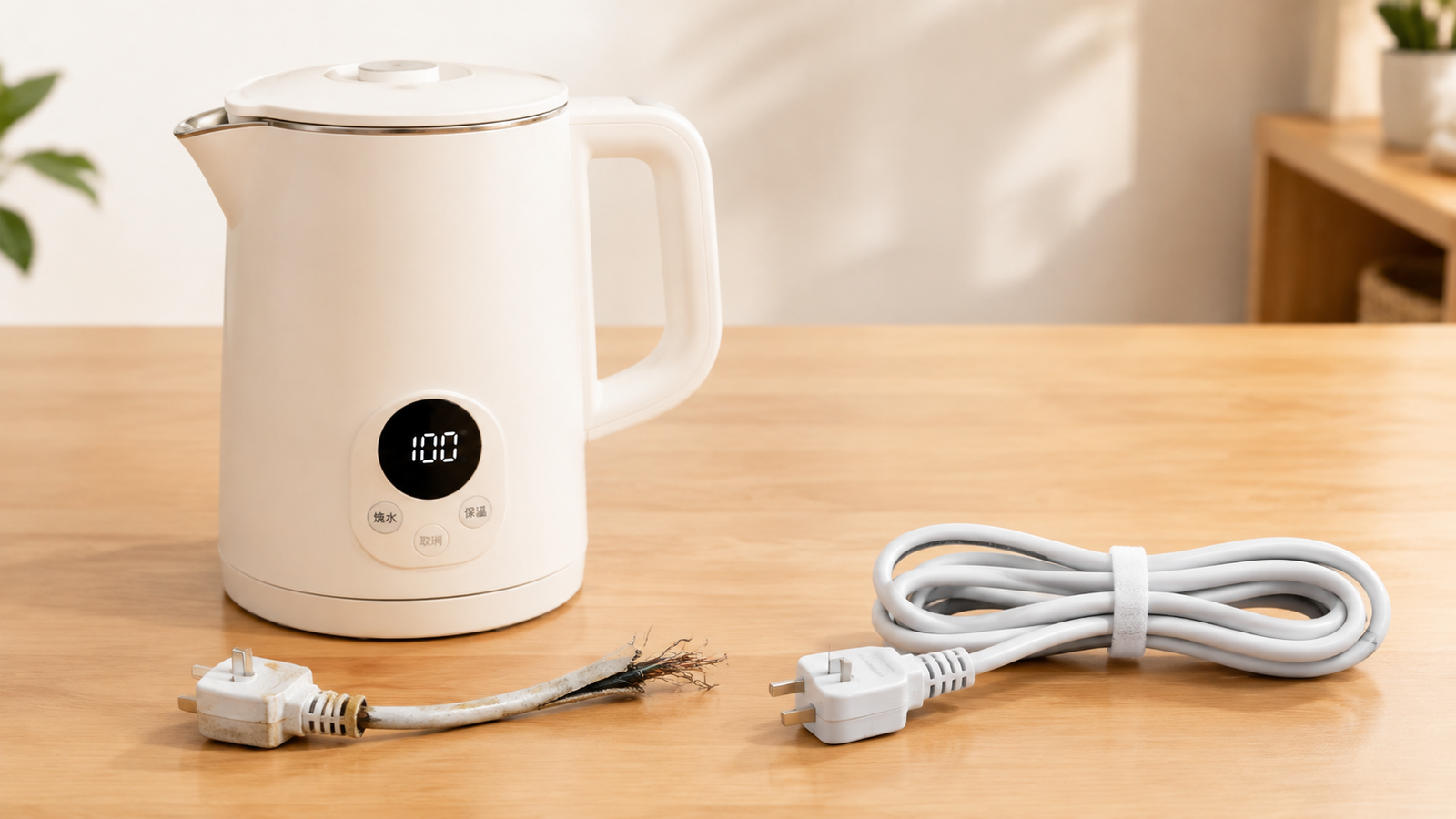
A replacement has to match more than the wall-plug shape. The appliance-side connection, cord length, exit position, and electrical information matter too. A mismatch may prevent installation or create a safety concern during use.
Start with the failed section of the cord
For a rice cooker, the replacement request may involve a detachable cord or a permanently attached cord with damage at the plug, along the cable, or near the appliance entry point. Before asking for a quote, prepare four kinds of information:
- the destination market and its plug format;
- the voltage, current, or wattage shown on the appliance nameplate;
- whether the appliance uses a detachable connector or a fixed cable entry;
- the original cord length, plug photos, appliance-side photos, and required quantity.
Photos make a practical difference. Take pictures of the front and back of the plug, the markings on the cable, and the appliance-side connection. This gives a supplier more to work with than “rice cooker power cord” alone. If the cord is permanently attached, show how it enters the housing and how the original strain-relief arrangement is made.
A replacement cord must fit the destination market
The same type of small appliance may need different plug formats in different markets. HSC’s current catalogue organizes power cords and plugs by country and standard. Buyers can start with the power cords and plugs category to identify a suitable direction.
For example, the catalogue records CCC for the China Standard Three Prong Right Angle Power Cord; UL and ETL for the 1 15P American Polarized Power Cord; VDE and ENEC for the European Straight French Power Cord; and PSE for the Japan Two Pin With Ground Wire Power Cord. These certification records belong to the specified catalogue products. They should not be read as a claim that every replacement cord or every market is automatically covered.
For after-sales parts, tell the supplier both where the original appliance is sold and where the replacement will be used. Even appliances from the same brand may use different plugs for different sales markets. If the replacement will be sent across borders as a service part, include the destination when you request a quote.
Small replacement orders can start with one set
Standard appliance programs often plan power cords in production quantities. After-sales replacement demand does not always reach those volumes. A buyer may need only one cord to repair and return a single customer’s rice cooker, coffee maker, or other small appliance.
HSC supports overseas shipment of replacement sets starting from one piece. You do not need to turn a single repair into a large production order first. Fill in the Contact Us page with the appliance type, destination market, photos of the original cord, available nameplate information, and quantity. A dedicated HSC representative will then contact you to confirm the fit, replacement details, and overseas shipping arrangement.
This approach can be useful when:
- an after-sales team needs to send one replacement cord to an end customer overseas;
- a repair channel wants to verify the dimensions and connection of a replacement first;
- a small-appliance brand is building spare-parts lists for several markets;
- an existing cord supplier has discontinued the part and an alternative needs to be reviewed.
“Starting from one piece” does not mean that every cord can be ordered without checking the details. Fit still depends on the appliance-side structure, destination market, and electrical requirements. A complete request is more likely to produce a useful answer than “one rice cooker power cord” without photos or specifications.
A quick check before you send the request
Use this short checklist:
- Does the plug match the final market of use?
- Does the appliance-side connector or fixed cable entry match?
- Did the voltage, current, or wattage come from the appliance nameplate?
- Do the cord length, exit direction, angle, and strain-relief position need to remain unchanged?
- Do you need one replacement set for a test repair, or will there be an ongoing spare-parts program?
- Is the overseas destination ready for the quotation request?
If only one small-appliance power cord has failed, a low quantity should not prevent you from looking for a suitable replacement. Take the photos, record the nameplate information, and submit the request through the Contact Us page. HSC can start by helping you review a single replacement set.
This article provides general industry information. Specific technical requirements remain subject to the current standards and certification-body rules of the target market.
RELATED EVIDENCE
Related products and certifications
Related products
Certification evidence
VDE Certification for HSC-402/403