PUBLISHED ARTICLE / XUNPAN
Power Cords for Small Appliance Exporters: Plug Systems, Certification Changes, and What to Check Before You Order
The power cord is certified together with the appliance — a wrong plug or an expired certificate holds up the whole shipment. A working guide to plug systems by market, the common connector mistakes, and what changed in 2026.
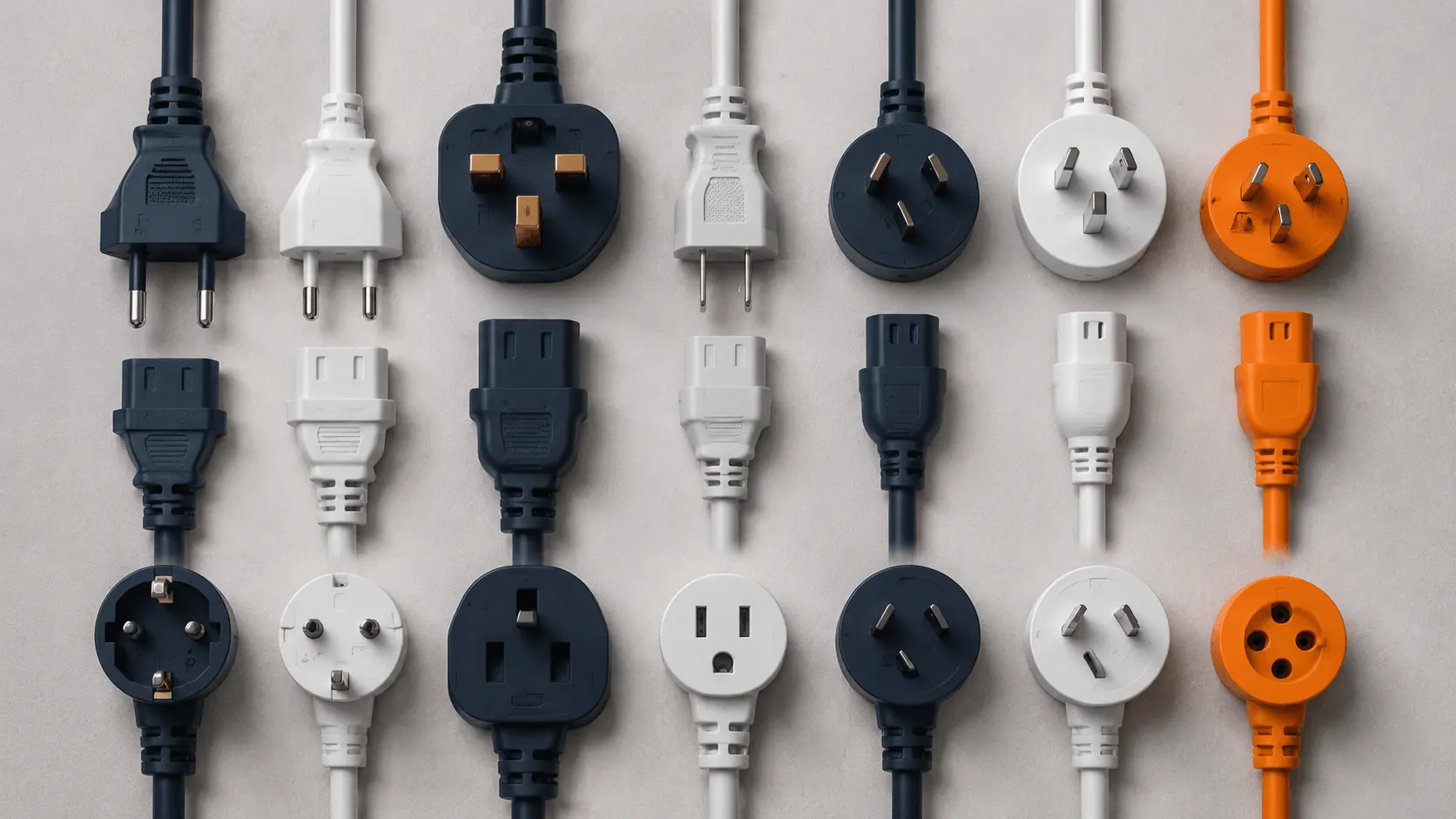
If you source for a small-appliance exporter, chances are a power cord has burned you before.
The story usually goes like this: the appliance certification is nearly done, someone finally looks at the cord, and the plug on your current stock doesn't match the destination market. Or the cords are built, and the certification body points out the certificates sit under an old standard — and the shipping schedule dies there. A power cord costs almost nothing, but it rides through safety certification with the whole appliance. Plug, cordage, coupler: any one of them wrong, and the appliance doesn't ship.
We have been making cord since our predecessor factory started in 1996, and the questions we field almost always come back to the same handful of problems. This article lays them out.
List every destination market before you talk plugs
The plug system follows the destination market — there is no shortcut. The markets small-appliance exporters deal with most:
| Market | Plug system | Common certifications |
|---|---|---|
| China | GB two-pin / three-pin | CCC |
| North America | NEMA 1-15P, 5-15P, etc. | UL / ETL |
| Continental Europe | French / German plugs (CEE 7) | VDE / ENEC |
| United Kingdom | BS square pin | ASTA |
| Japan | JIS two-pin / grounded | PSE |
| Australia / New Zealand | Angled flat pin | SAA / NSW |
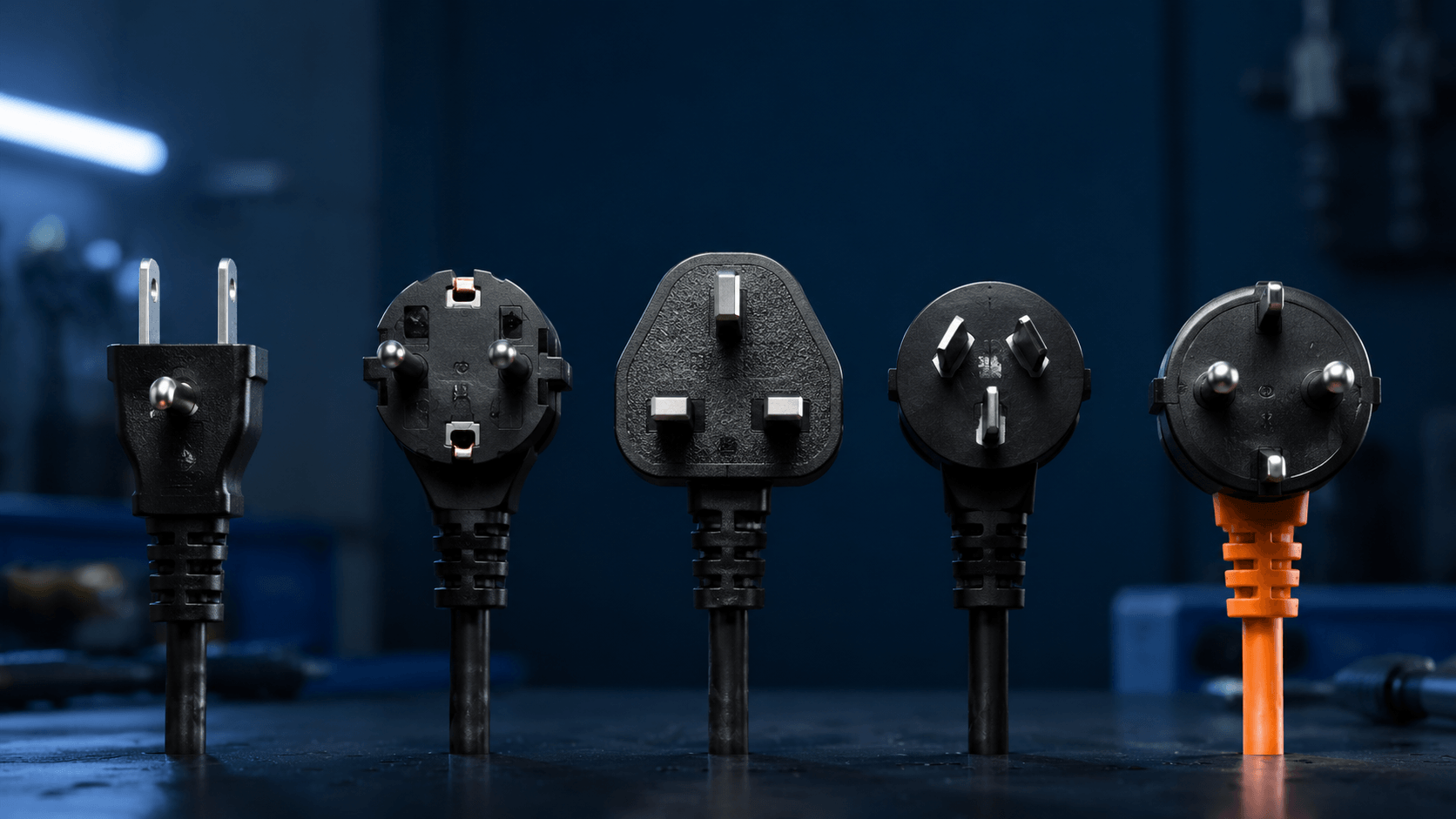
Beyond these: South Korea wants KC, Taiwan BSMI, Brazil INMETRO, Thailand TIS, South Africa SABS, Switzerland SEV, and the Gulf markets run on GSO/SASO. Each is its own system.
In our experience, the orders that end in rework are rarely single-market deals. They are the "we mainly sell to Europe, plus some Korea and Taiwan on the side" orders. Writing down every destination at the drawing stage beats everything else. Miss one market on the list, and you have a rework batch on your hands.
The other end of the cord: don't guess on the coupler
Now the appliance end. Appliance couplers follow IEC 60320, and small appliances live on three of them:
The figure-8 (C7/C8) — two-wire, ungrounded. Rated 250V/2.5A internationally, or 125V/10A in the North American system. Radios, small lamps, and lower-power kitchen devices.
The C13/C14 — 10A/250V, the most-used coupler combination in the world, everywhere from desktop equipment to IT gear.
The C5/C6 cloverleaf — grounded, the usual choice for Class I devices like laptop adapters.
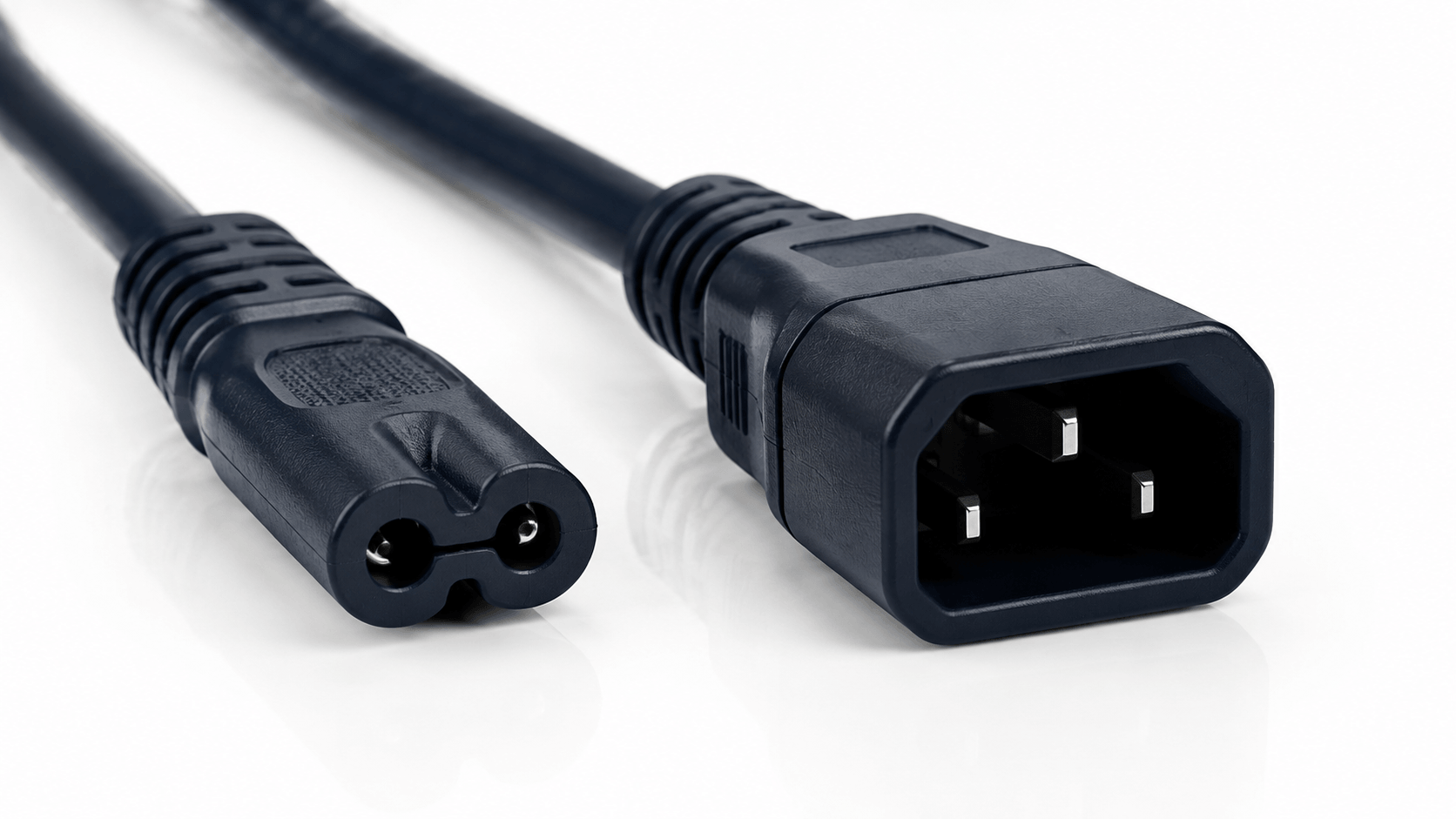
One trap deserves its own paragraph: every so often someone asks us to quote a two-wire C7 to three-wire C14 cord. Certification bodies will not certify that combination — the missing ground pin makes it a non-starter under safety logic. If the appliance inlet is three-wire, the cord end must be three-wire. Pin count and grounding have to match; this is not the place to improvise.
What's happening in 2026

The three changes buyers have asked us about most this year happen to be this year's news.
In North America, the revised UL 62 is now mandatory (since July 2025). UL 62 governs the flexible cordage itself, and the revision touches cord construction and testing. For US-bound orders, ask one question before you order: has this cordage been evaluated against the revised edition?
In China, the CCC plug-and-socket certification is mid-conversion — this is the urgent one. Under the CQC notice, certificates under the old standard had to convert by August 1, 2026, and anything unconverted gets withdrawn after November 1. If you build for the Chinese market, pull out your cord certificates and check them now. August 1 has already passed; the window is tighter than it looks.
In the Gulf, GSO and SASO have updated enforcement dates for plug and socket certification. Anyone shipping to Saudi Arabia or the wider Gulf should verify certificate validity and work through the testing differences between SASO 2203 and GSO 2117.
The fine print on all of this belongs to the certification bodies and the current standards in each market. When in doubt, hand your market list to the supplier and go through it line by line — faster than researching it alone.
Before you place the order
No need to memorize a checklist. Understand the three layers above, then verify:
- Every destination market on the list — nothing missed on multi-country orders;
- Plug system and ratings confirmed for each market;
- Appliance inlet (C7 / C13 / C5) matches the cord end in pin count and grounding;
- Cordage standard and conductor size match the appliance's power and certification file;
- The cord model's certification status in each target market — and which edition the certificate sits under;
- Anything unusual about the use environment — heat near kitchen appliances, flex cycles for anything that moves;
- Whether the supplier can provide controlled certification files and change management per project.
One last thing
Cord sourcing works backwards from the destination: fix the market, then the plug and coupler, then verify the certificate. Thirty minutes at the drawing stage is far cheaper than retrofitting certification around mass production.
Our power cords and plugs catalogue is organized into fifteen market families — China, North America, Europe, Japan, and Australia among them — and certification records can be requested per project through the quality page. If your order spans several markets, send us the requirements and we will go through them one by one.
This article is general industry information; actual requirements are governed by the standards and certification bodies of each destination market.