PUBLISHED ARTICLE / XUNPAN
IEC C5 vs C7 Power Cords: Check the Inlet and Earthing Design First
C5 and C7 are common appliance connectors, but they differ in mating inlet and protective-earth arrangement. A complete RFQ should define the equipment and the full cord, not only a connector nickname.
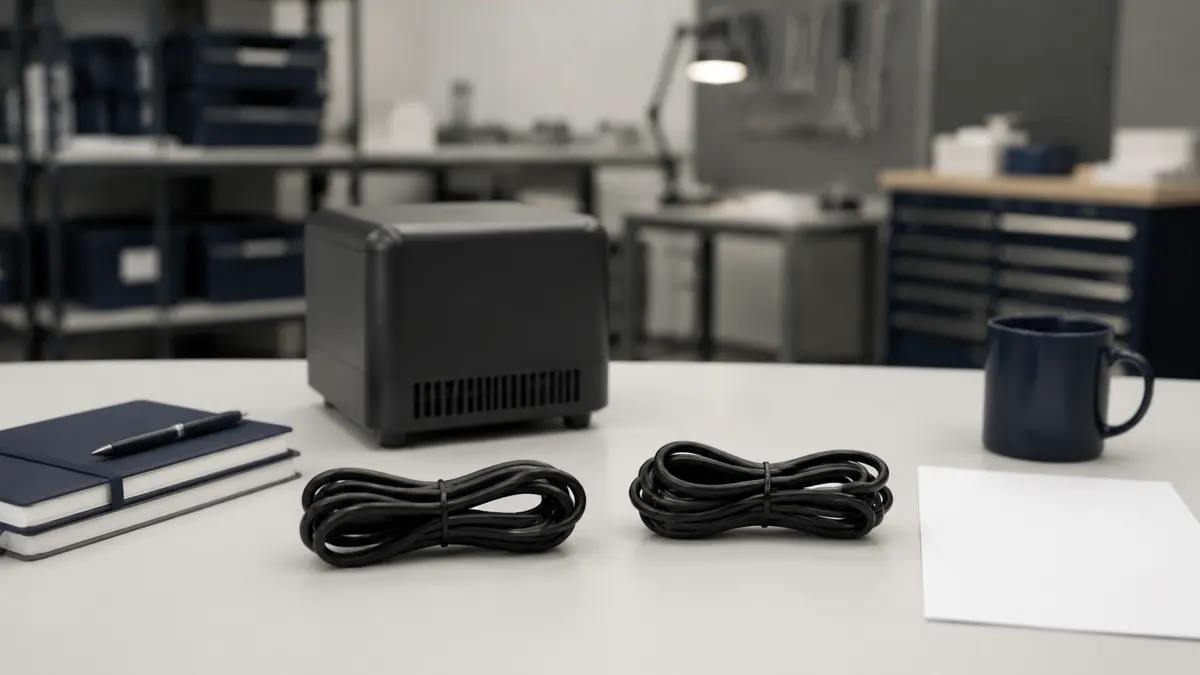
An appliance photograph appears to show a “cloverleaf” or “figure-eight” connection, so the purchase request simply says C5 or C7. The problem is that either designation describes only the appliance-end connector family. It does not define the supply plug, cable construction, length, ratings, or destination market. If the appliance inlet is identified incorrectly, the rest of the specification is built on the wrong interface.
IEC 60320-1:2021 sets general requirements for two-pole appliance couplers and two-pole couplers with an earthing contact for household and similar purposes. IEC 60320-3 provides the relevant standard sheets and gauges. For a purchasing team, the useful starting point is to match the cord connector to the appliance inlet and to the equipment's protective-earthing design.
Confirm the C5/C6 and C7/C8 relationships first
Under common IEC 60320 naming, C5 is the cord-end connector that normally mates with a C6 appliance inlet. C7 is the cord-end connector that normally mates with a C8 inlet. The C5 family normally includes a protective-earth contact, while the C7 family has two contacts and does not provide a protective-earth contact.
That distinction does not allow a cord choice to change the protection class of the appliance. The equipment design, rating plate, instructions, and destination-market requirements determine whether protective earth is required. Equipment built with a C6 inlet should not be changed to C7 merely because the latter looks smaller or is easier to source. Nor should another interface be added to two-pole equipment without an engineering basis.
Include a clear front-facing photograph of the appliance inlet, the equipment model, the interface designation, and the relevant instruction-manual page in the RFQ. A photograph should show the full outline, but final confirmation still depends on equipment documentation and physical fit.
The same appliance end still needs a market-specific supply end
C5 or C7 describes one end of a complete cord. The other end can vary by destination market, and any approval claim must be checked against the proposed finished model.
For example, HSC's current catalogue lists a Korea C5 record with KC and a Taiwan C5 record with BSMI. C7 examples include an Australia Right Angle C7 record with SAA and NSW, and a European 90 C7 record with VDE and ENEC. Those fields apply only to the respective catalogue records; they do not extend one model's approvals to every C5 or C7 cord.
An RFQ should therefore state the country or region of sale, supply-end plug, appliance inlet, rated voltage and current, frequency, core count, conductor specification, length, jacket, and colour. If the customer requires test reports, certificates, or particular labelling, identify each document and the model scope it must cover.
Straight or right-angle depends on the real installation space
A right-angle connector changes the cable-exit direction, but it does not automatically solve a clearance problem. If the bend points toward a housing wall, bracket, or adjacent interface, it may create an assembly conflict. Provide the inlet position, connector insertion direction, nearby obstructions, and the intended cable route.
Also distinguish a moulded right-angle connector from a straight connector whose cable is forced into a sharp bend after installation. The latter may impose continuing side load on both the connector and appliance inlet. For equipment installed in a shallow enclosure, wall-mounted assembly, or packaged cavity, check insertion, removal, and routing with the actual space during sample review rather than relying on catalogue photographs.
Verify these six items before sending the RFQ
- Appliance inlet: confirm C6 or C8 using equipment documentation, model details, or a front-facing photograph.
- Earthing design: follow the equipment's protective-earth requirement rather than appearance or available stock.
- Supply end and market: identify the destination country or region and supply-plug format.
- Complete-cord conditions: state ratings, core count, conductor specification, length, jacket, colour, and environment.
- Installation space: define straight or right-angle orientation, exit direction, clearance, and service access.
- Document scope: ask the supplier to confirm approvals, tests, and labels against the exact proposed model.
The purpose of this process is to turn a connector name into a verifiable finished-cord specification. Browse HSC's power cords and plugs category, then send HSC the equipment information, destination market, and complete RFQ for model-specific review.
This article provides general industry information. Specific technical requirements remain subject to the current standards and certification-body rules of the target market.
RELATED EVIDENCE
Related products and certifications
Related products